
In the vibrant world of sports, badminton stands as a fast-paced, exciting game that requires both strategy and agility. Its popularity spans across the globe, attracting players of all ages and skill levels. To fully appreciate and participate in this sport, it's essential to understand the intricate rules that govern its play. This article aims to provide a comprehensive introduction to the fundamental and advanced rules of badminton in English, ensuring that both novice and seasoned players alike can navigate the court with confidence.
1. Court Dimensions and Markings
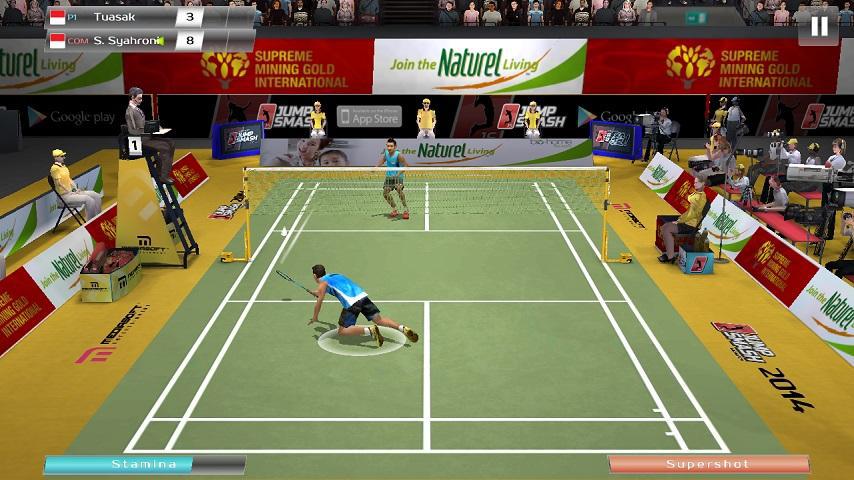
The badminton court is a rectangular area measuring 13.40 meters long by 6.10 meters wide. It is divided into two equal halves by a net, which is 1.524 meters high at the center and tapers to 1.55 meters at both sides. The court is marked with various lines and zones to define the playing areas:
Service Court: Each side of the court has four service courts, marked by a short line 1.98 meters from the net on each side.
Service Line: A long line parallel to the net, 2.35 meters from it, defining the outer limit of the service area.
Doubles Court Markings: For doubles play, additional lines and a rear service line (2.35 meters from the back of the court) are used to regulate play within the larger court area.
Kitchen/Front Court: The area in front of the service line, where players must start their rallies.
Rear Court: The area behind the service line, where players can move freely during play.
2. Racket and Equipment
A badminton racket is a crucial piece of equipment, with specific regulations governing its dimensions and weight. A standard racket must have a maximum length of 680 millimeters, a maximum width of 230 millimeters at the widest point, and a maximum weight of 95-100 grams (for unstrung rackets). The racket must also have a string-free space of at least 80 square centimeters on each face. Players are not allowed to use any foreign objects or illegal modifications to their rackets.
3. Scoring System
Badminton matches are typically played in sets, with each set consisting of two games (for singles) or three games (for doubles). The first team to reach 21 points wins a game; however, if the score reaches 20-20, a team must win by two clear points (e.g., 22-20). In case of a tie at 29-29, an additional point is played until one team clears two points ahead. Scoring is done in 'by two' format, meaning that players alternate serving and scores are recorded in multiples of two (e.g., 0-2, 2-4).
4. Service Rules
Service is a crucial aspect of badminton, with specific rules governing its execution:
Server and Receiver: The right-hand player on each side serves first; after each point, the server changes but remains in the same half of the court, while the receiver rotates to the other half.
Service Position: The server stands behind the service line and within one of the four service courts, facing the diagonal corner of the opposite court.
Overhand and Underhand Serves: Both overhand (where the racket head moves above the waist during the swing) and underhand (below waist) serves are allowed, but only once per service until a fault occurs or a point is scored.
Faults: A serve is considered a fault if it lands outside the service area, touches the net before landing on the opponent's side, or if it is not delivered correctly (e.g., with an illegal motion).
5. Rally Rules
Once play begins after a valid service, the following rules apply:
Shuttlecock in Play: The shuttlecock must be hit with the racket only once per stroke; multiple hits are considered faults. The shuttlecock must clear the net on every stroke except for a net kill (a shot that lands on the opponent's side after crossing the net).
Faults During Rally: A fault occurs if a player: hits the shuttlecock with their body or clothing; hits it out of bounds; touches the net or net cord with their racket or body; or fails to return a clear shot properly.
Rally Point: If both players successfully return the shuttlecock without faults, it continues until one player commits a fault or wins a point by making their opponent unable to return (e.g., by hitting it into an open court or with a powerful smash).
6. Doubles Play Specifics
In doubles play, an additional player joins each side, altering several aspects of the game:
Court Size: The court is larger for doubles play to accommodate two pairs of players on each side.
Court Positions: Each player has designated positions—the front court for serving and returning (usually played by more skilled players) and the rear court for supporting plays and shots (often played by less experienced players). Rotation rules ensure fairness and encourage movement around the court.
Team Communication: Effective communication between teammates is crucial for strategy and coordination in doubles play. However, excessive communication or signaling can be penalized if deemed disruptive or distracting to opponents.
7. Match Tiebreaks and Continuations
In certain competitions or when matches are tied at an odd number of games (e.g., 1-1 in best-of-three), a tiebreak set may be played to determine the winner. This set follows similar scoring rules but often has different rules (e.g., no let plays) to ensure fairness and excitement. If a match is interrupted due to external factors (e.g., injury), it may be resumed from where it was left off under specific conditions set by tournament rules.
Conclusion
Badminton's popularity stems from its accessibility, fast pace, and strategic depth. Understanding its rules is essential for both enjoyment and fair play. From the intricate service rules to the nuances of doubles play, every aspect contributes to this sport's unique charm. Whether you're just starting your badminton journey or seeking to refine your skills, mastering these rules will take you further down the path of excellence on the badminton court.
发表评论
暂时没有评论,来抢沙发吧~